

Are you tired of living with limited mobility caused by knee osteoarthritis? You’re not alone. Millions of people suffer from this debilitating condition, searching for effective non-surgical knee pain relief strategies.
Imagine a minimally invasive procedure that targets the root cause of your knee pain, reducing inflammation and providing long-lasting relief. That’s where Genicular Artery Embolization (GAE) comes in.
This groundbreaking treatment is revolutionizing the way we manage knee osteoarthritis pain, offering hope to those who have exhausted traditional options like medications and physical therapy.
Genicular Artery Embolization Procedure: Discover New Hope for Knee Osteoarthritis Pain Relief
Genicular artery embolization is a cutting-edge procedure that targets the specific arteries that supply blood to the knee joint. By using tiny particles to reduce blood flow and inflammation in these arteries, the procedure can provide significant pain relief for those with knee osteoarthritis.
The procedure involves inserting a small catheter into the artery in the groin and guiding it to the genicular arteries around the knee. Once in place, tiny particles are injected to decrease blood flow to the inflamed areas of the knee joint. This reduces inflammation and pain, allowing for improved mobility and quality of life.
Benefits of Genicular Artery Embolization Over Traditional Surgical Methods
One of the biggest advantages of genicular artery embolization is that it is a minimally invasive outpatient procedure. Unlike knee replacement surgery, which requires a hospital stay and lengthy recovery period, patients can typically go home the same day after genicular artery embolization.
Recovery time is also much quicker compared to knee replacement surgery. According to a study published in the Journal of Vascular and Interventional Radiology, most patients can return to normal activities within a week, whereas knee replacement surgery can require months of physical therapy and rehabilitation.
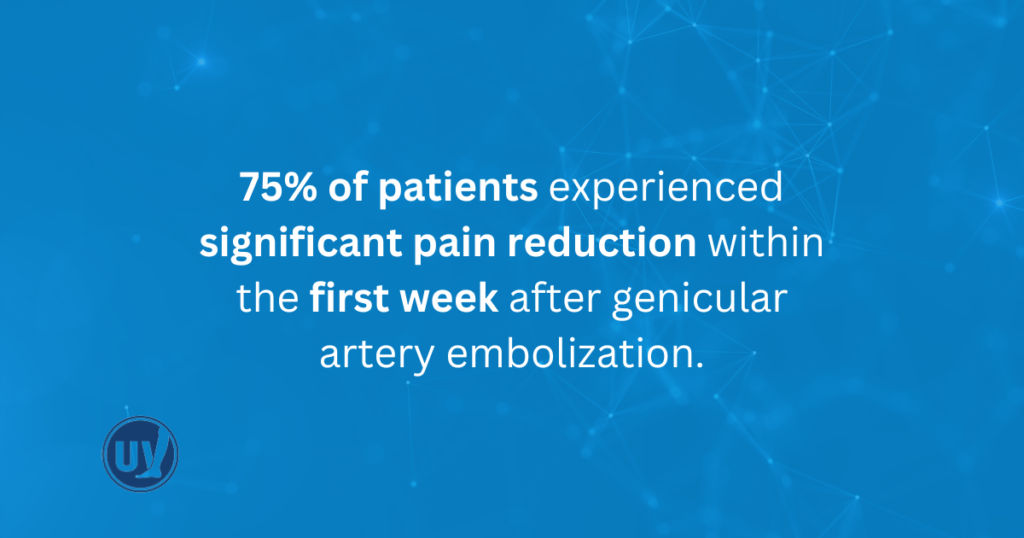
Perhaps most importantly, genicular artery embolization has been shown to be highly effective in reducing knee pain and improving mobility in patients with knee osteoarthritis. In fact, many patients report significant pain relief within the first few days after the procedure.
Alternative to Knee Replacement Surgery
For those suffering from persistent knee pain due to osteoarthritis, genicular artery embolization offers a promising alternative to knee replacement surgery. This minimally invasive procedure targets the blood vessels that contribute to inflammation and pain in the knee joint, providing relief without the need for major surgery.
When to Consider Genicular Artery Embolization
If you’ve been diagnosed with moderate to severe knee osteoarthritis and conservative treatments like physical therapy, medications, and injections haven’t provided sufficient relief, genicular artery embolization may be an option. This procedure can be especially beneficial for those who want to avoid or delay knee replacement surgery.
Comparing Genicular Artery Embolization to Knee Replacement Surgery
While knee replacement surgery involves removing the damaged joint and replacing it with an artificial one, genicular artery embolization takes a less invasive approach. The procedure involves inserting a catheter into the blood vessels supplying the knee and injecting tiny particles to block the blood flow to the inflamed areas.
Lifestyle Modifications to Complement Genicular Artery Embolization
Genicular Artery Embolization (GAE) is a highly effective treatment for managing knee pain caused by osteoarthritis. However, to maximize its benefits and ensure long-lasting relief, it’s essential to adopt certain lifestyle modifications that complement the procedure.
Maintaining a Healthy Weight to Reduce Joint Stress
One of the most crucial lifestyle changes is maintaining a healthy weight. Excess body weight puts additional stress on the knee joints, exacerbating pain and inflammation. By losing weight through a balanced diet and regular exercise, patients can reduce the load on their knees, thereby minimizing pain and slowing down the progression of osteoarthritis. According to the Arthritis Foundation, every pound of weight loss can reduce the pressure on the knee joint by four pounds, significantly alleviating pain and discomfort. Additionally, the National Institute of Arthritis and Musculoskeletal and Skin Diseases emphasizes the importance of weight loss in managing osteoarthritis, as it can reduce the risk of developing the condition and slow its progression.
Engaging in Low-Impact Exercises to Strengthen Muscles Around the Knee
Engaging in low-impact exercises is another essential lifestyle modification that complements GAE. Strengthening the muscles surrounding the knee joint helps stabilize the joint, reduces pain, and improves overall function. Some recommended low-impact exercises include:
- Swimming or water aerobics
- Cycling on a stationary bike
- Elliptical machine workouts
- Gentle yoga or tai chi
It’s crucial to consult with a physical therapist or a healthcare professional to develop a personalized exercise plan that suits your specific needs and abilities.
Avoiding High-Impact Activities That Can Exacerbate Knee Pain
While exercise is beneficial for managing knee osteoarthritis, it’s essential to avoid high-impact activities that can worsen knee pain. These activities include:
- Running or jogging on hard surfaces
- Jumping or plyometric exercises
- Contact sports like football or basketball
- Climbing stairs or steep inclines
Instead, focus on low-impact exercises that put less stress on the knee joints while still providing the benefits of physical activity.

Combining Genicular Artery Embolization with Other Pain Management Techniques
In addition to lifestyle modifications, combining GAE with other pain management techniques can further enhance its effectiveness in relieving knee osteoarthritis pain.
Using Heat and Cold Therapy to Alleviate Pain and Stiffness
Applying heat or cold to the affected knee can help alleviate pain and stiffness. Heat therapy, such as using a warm compress or taking a warm bath, can increase blood flow and relax tense muscles around the joint. Cold therapy, like applying an ice pack, can reduce inflammation and numb pain. Alternating between heat and cold therapy can provide even greater relief.
Incorporating Physical Therapy to Improve Range of Motion and Flexibility
Physical therapy plays a vital role in managing knee osteoarthritis pain. A skilled physical therapist can teach you exercises and techniques to improve your knee’s range of motion, flexibility, and strength. They can also provide guidance on proper body mechanics and joint protection strategies to minimize stress on the affected knee.
Take Control of Your Knee Pain Today
Genicular artery embolization offers an innovative non-surgical knee pain relief solution for those suffering from knee osteoarthritis. This innovative procedure targets the arteries supplying the knee joint, reducing inflammation and providing long-lasting pain relief without the need for surgery.
If you’re struggling with persistent knee pain and limited mobility while trying to remain active, it may be time to consider genicular artery embolization. Talk to a knee pain specialist about whether this procedure is right for you and how it can help you regain your quality of life.
Don’t let knee pain hold you back any longer. Take the first step towards a more active, pain-free life by exploring genicular artery embolization as a potential treatment option. With its proven effectiveness and quick recovery time, you could be back on your feet and enjoying the activities you love sooner than you think.
Frequently Asked Questions
Genicular Artery Embolization is a promising treatment option for patients suffering from moderate to severe knee osteoarthritis who have not found relief through conservative treatments such as physical therapy, medications, or injections. This minimally invasive procedure is particularly beneficial for those who are not suitable candidates for knee replacement surgery due to age, weight, or other health conditions. Reach out to schedule a consultation today!
Genicular Artery Embolization is performed as an outpatient procedure, typically lasting about 1-2 hours. The patient is given local anesthesia and mild sedation to ensure comfort during the procedure. The interventional radiologist will make a small incision in the groin area and guide a thin catheter through the femoral artery to the genicular arteries in the knee. Once the catheter is in place, the radiologist will inject tiny particles called microspheres to block the blood flow to the inflamed synovium, reducing inflammation and pain. After the procedure, the patient will need to rest for a few hours in the recovery room before being discharged home.
Most patients experience a significant reduction in knee pain within the first week after the procedure. They can gradually resume normal activities as tolerated, but should avoid strenuous exercises or high-impact activities for at least 2-4 weeks. If you’re curious to learn more about what to expect, schedule a consultation with a GAE procedure specialist location near you.
The duration of pain relief after Genicular Artery Embolization varies from patient to patient, depending on factors such as the severity of the osteoarthritis, age, and overall health. Studies have shown that the majority of patients experience significant pain relief and improved function for at least 6-12 months after the procedure.